
Trello had spent a year building personal productivity features, but the features weren’t creating the behavior change we needed. Although we had shipped a series of innovative features, there was little connecting them together, making it harder for users to discover and engage with new features.
I led a cross-discipline group to explore the opportunity, facilitated the discussion, and turned what we learned into a framework that shaped how the team approached feature work and discovery across multiple work streams.
Reframing the opportunity
The initial instinct across the team was to solve for engagement by building something new: a rewards mechanism, a streak system, or both. These ideas had proven successful for other apps and streaks, in particular, felt like an obvious answer given how widely they’re used to build user habits.
Something about this direction didn’t sit right with me, and I wanted to understand why before the team committed to it. I researched how streak mechanics influence a user’s behavior and discovered that, rather than reinforcing the underlying goal, these types of features tend to shift motivation toward streak maintenance. When users break their streak, the friction of restarting is often enough to push them out of the app entirely. I wrote a post and recorded a detailed walkthrough to share these findings with the team, making the case that we had a system problem, not a feature gap.
That post reframed the opportunity and shifted the conversation away from which feature to ship next and toward how to create a system that reinforces user behavior at each step and drives users naturally forward.
Exploring the opportunity through intentional working sessions
I lead and organized a cross-functional working session with designers, project managers, and engineers that had three objectives: establish a shared definition of the problem, explore what we wanted users to discover and why, and align on next steps.
What
Help users reach their goals through non-intrusive, but high impact feedback using concepts like matching law, quantified self, and highlighting achievement to reinforce behavior.Why
Coaching and reinforcing behavior loops can increase the value users experience in Trello and help them discover new personal productivity workflows.How
Using in app messaging and personalized data to help users quantify their achievements and share their success.So what?
→ Reinforce behaviors that drive our metrics.
→ Build value in Trello by helping users feel organized, productive and accomplished.
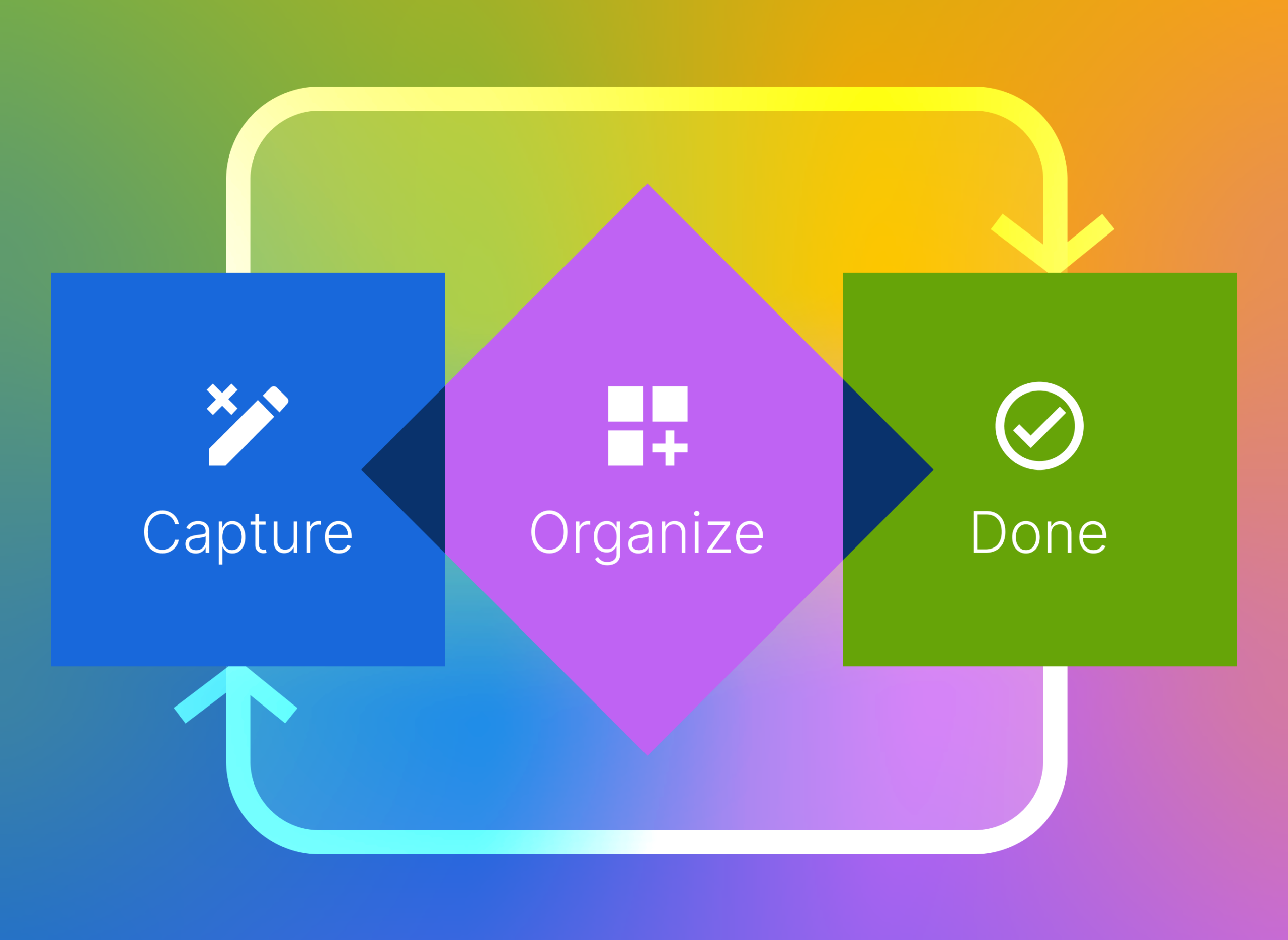
I used Trello’s core loop — Capture → Organize → Done — as an anchor for the discussion. Each transition in that loop was a moment where users could either continue or drop off. Our opportunity was to make those transitions more rewarding and obviously connect to the next step without disrupting the ways users already worked.
Participants mapped ideas to each stage of the core loop, finding connections between user needs and features. This helped us identify existing gaps in the user experience and get a better understanding of how we could make this approach a repeatable framework.

After 90 minutes, we closed by assessing confidence in our approach and discussed potential blockers. The confidence that having a framework to help us focus on problems and user journey was high across disciplines and folks were excited to bring this into their process.
Turning the workshop into a reusable framework
Talking about an opportunity in workshops isn’t enough to change how a team works. I turned our discussions into a documented framework focused on driving and reinforcing behavior through each step of the core loop.
The framework provided visualizations of the core loop and prompts to help teams think about the problem they were trying to solve, not just feature execution. It encouraged teams to map out where their ideas fit within the core loop, bring in user insights from research or feedback, and build solutions around helping users naturally discover capabilities and move them to the next step in the loop.
To further support the team and the adoption of this framework, I built a toolkit to make it usable by anyone on the team, which included: Confluence resources, Figma templates, and a Loom demonstrating how to use the toolkit in a workshop. The goal was to make the framework easy to use so that it could be an evergreen addition to our process.


A system that traveled
The Feedback Loops framing started surfacing organically across the org: in Planner vision work, evergreen discovery strategy, personal boards exploration, and early AI agents thinking. Additionally, teams that hadn’t been in the original session were using the language and the mental model to explore ideas.
Building shared language around the system made it easier for folks to connect with and adopt. The framework was grounded in understanding the user journey and behavior so it transferred across different product surfaces and team contexts in ways a feature-level solution never would have.
I received feedback from leadership who saw an opportunity to take the conversation beyond Trello to other teams across Atlassian who were thinking about similar engagement challenges. The opportunity across the organization was to build a shared understanding of how feedback and reinforcement could tell a more cohesive story across products.
Results
The Feedback Loops framework became a recurring tool for how the team thought about discovery and engagement across the product.
This framework helped teams ask what behavior we were trying to support, and why, rather than what features we should ship next.
Working across disciplines to build the framework made it easier for others to adopt and understand. In hindsight, I’d want to go further to identifying owners across disciplines who could champion it within their own teams long term, rather than relying on organic spread from participants.